Question your archives
Ask a question in plain language. Joha answers only from your documents, every sentence links to its original page or photograph, and the gaps are flagged.
Letters, inventories, scans, photographs: Joha turns your institution's archives into knowledge your teams can question, explore and publish from. Every sentence links back to the page or photograph it comes from.
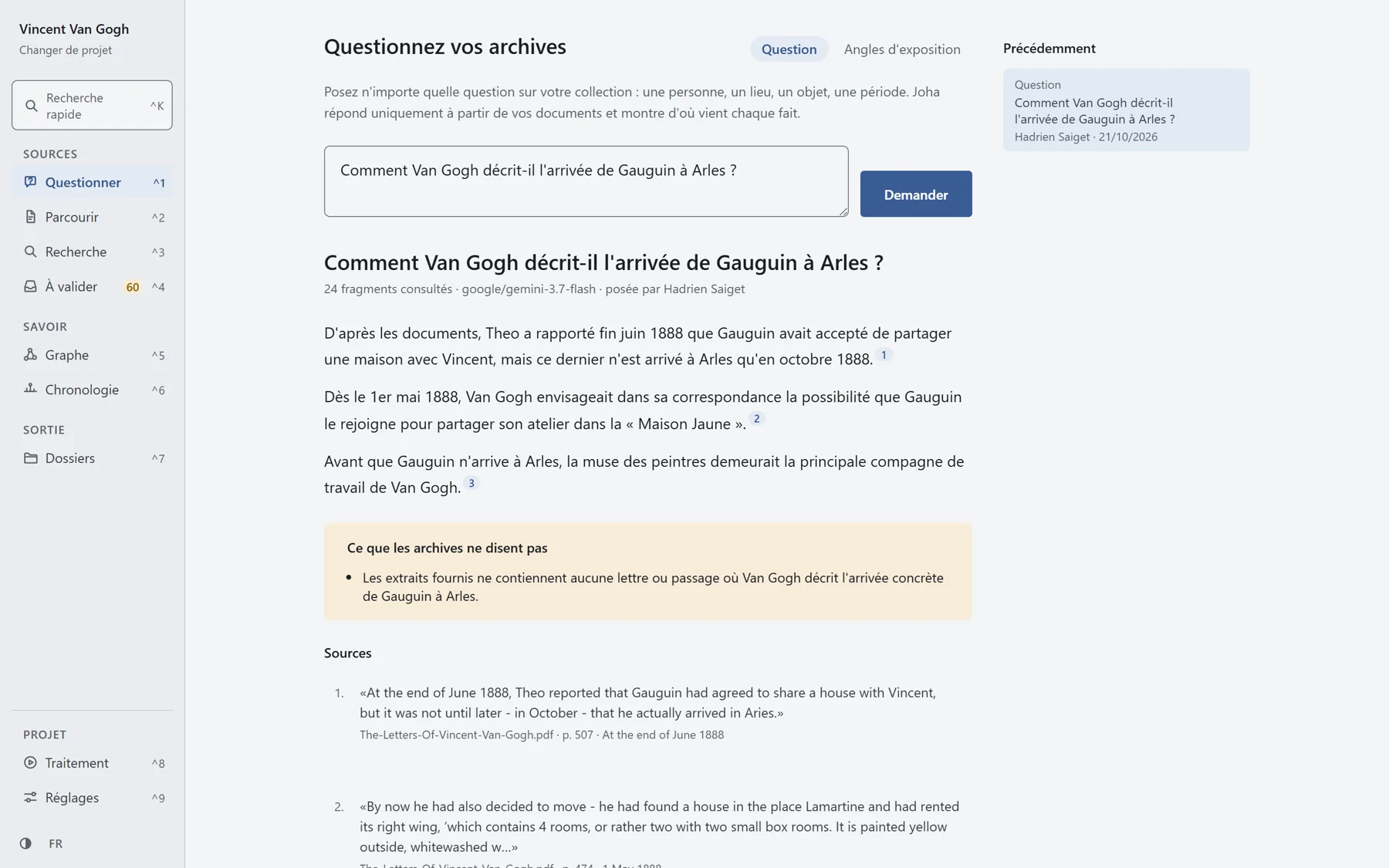
A sentence the AI cannot tie to a passage is removed, not shown. What the archive does not say is stated plainly.
Tags, duplicates, authority links: the AI proposes, a person approves. Every significant change takes a backup first.
A project is a plain folder on your computer or shared drive. Only passages leave, one at a time, to the AI provider you choose, or to none with a local model.
Drop in your documents, run the processing, then ask your questions. Joha does the sifting, your teams keep control over what enters the collection.
Ask a question in plain language. Joha answers only from your documents, every sentence links to its original page or photograph, and the gaps are flagged.
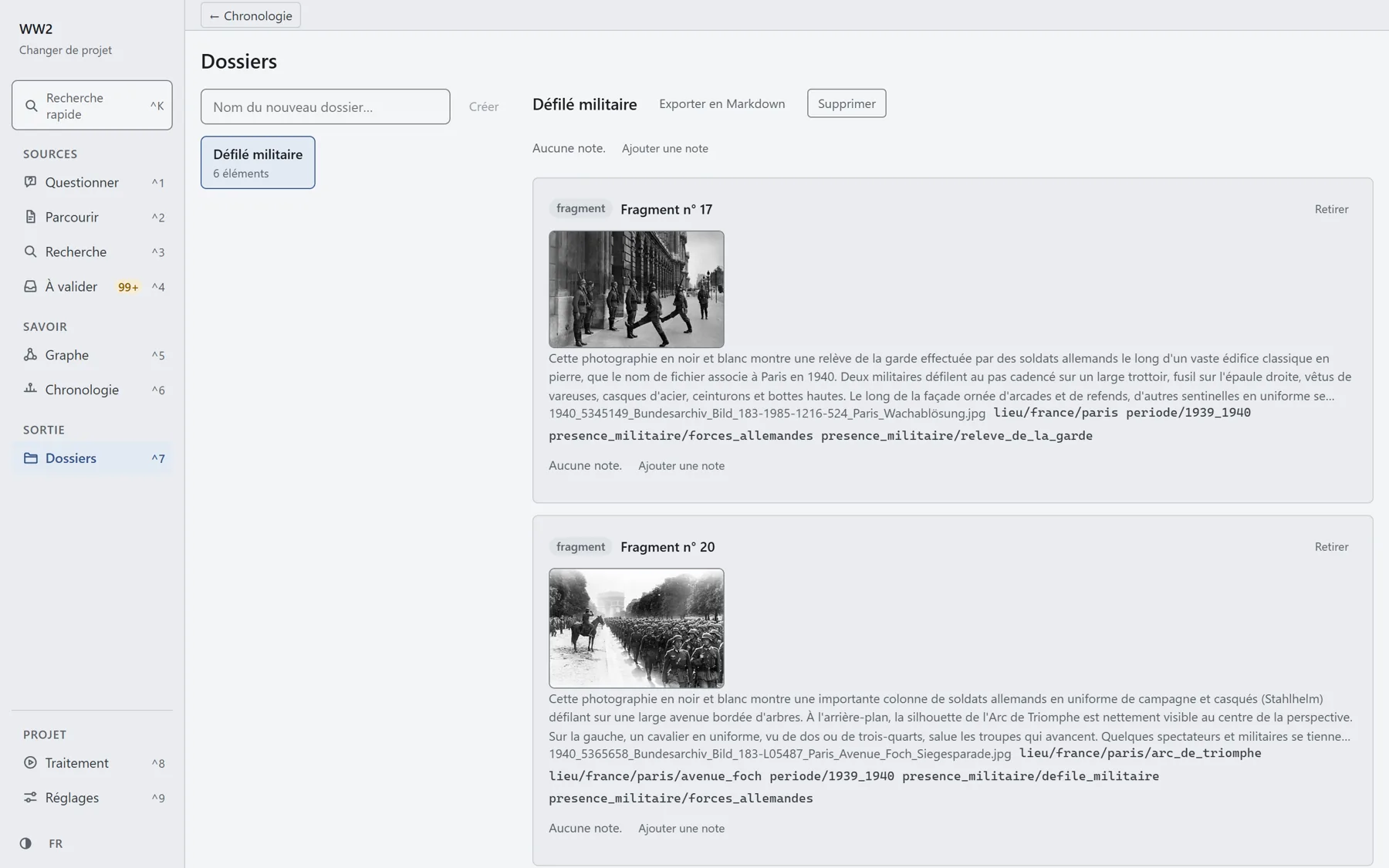
Give a theme and Joha proposes story threads your collection can carry, each backed by at least two cited passages. Keep the best one as a dossier in one click.
People, places, events and objects are extracted from your documents and linked together. Every link points to its source and can be tied to Wikidata, IdRef, the BnF or VIAF.
The timeline puts documents and photographs back in time, down to the day when the sources allow it. Every date the AI proposes is flagged and can be checked.
One Review inbox gathers proposed tags, duplicates and uncertain links, each with its confidence. Nothing enters the collection without approval.
Gather evidence in a dossier, then draft a gallery label, room panel or collection record, every sentence sourced. Export to CSV, JSON, Dublin Core or Markdown.
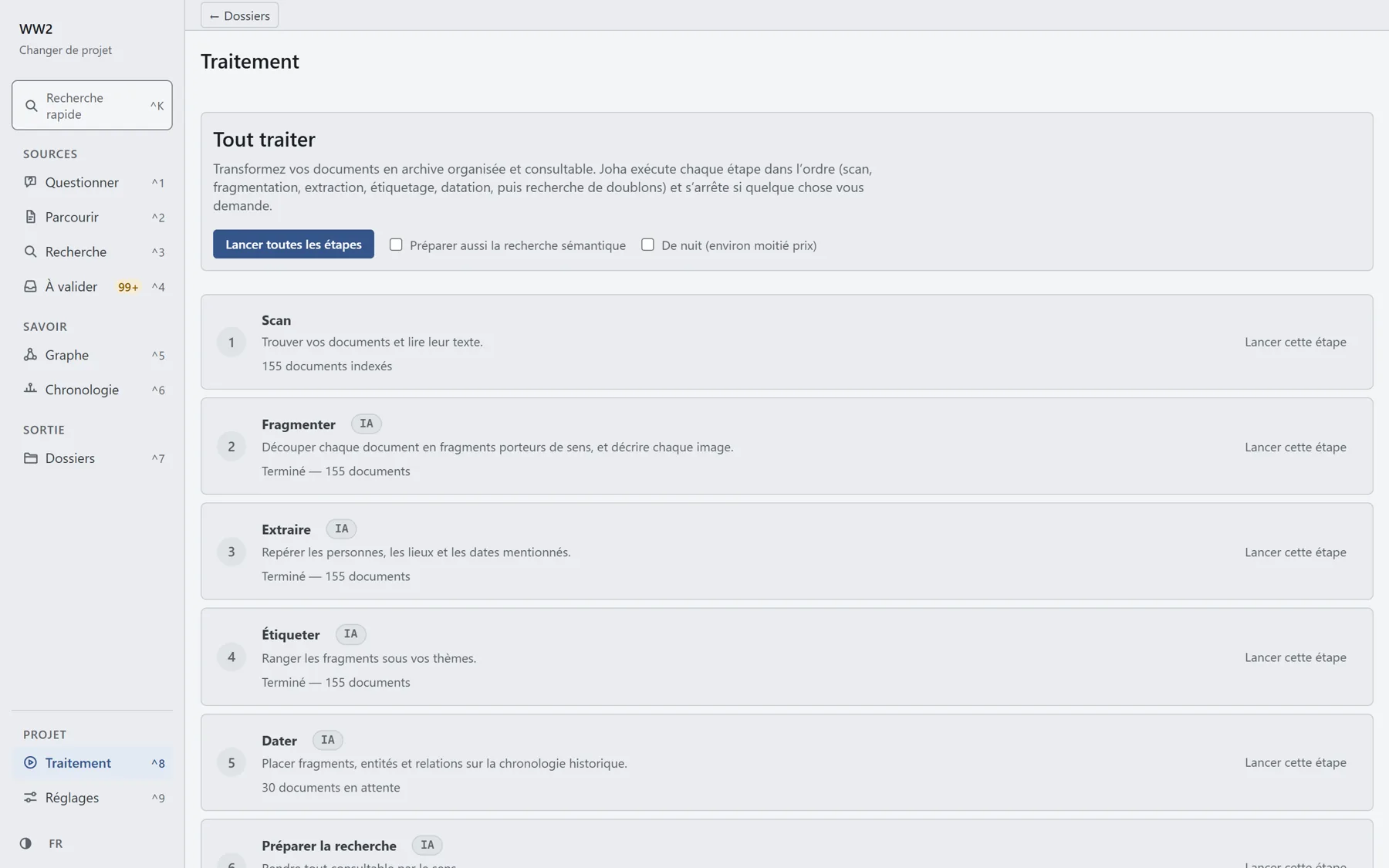
PDFs, scans, text and photographs: Joha reads the scans, describes the images, cuts them into passages, finds people and places, dates them and proposes tags. One click on Run all is enough.
Bring unexpected angles out of your archives and build the narrative with the evidence at hand.
Make a little-explored collection readable and searchable by the whole team, without months of sifting.
Start from a dossier of evidence to write labels, panels and records, every claim sourced.
In a folder on your computer or shared drive. Nothing is hosted by us. Only passages are sent, one at a time, to the AI provider you choose (Google, Anthropic, OpenAI, Mistral), or to none if you use a local model.
Joha removes any sentence it cannot tie to a passage of your documents, and states explicitly what the archives do not say. Proposals (tags, dates, links) wait for a person's approval.
PDFs (text or scanned), text files and images (photographs, scans). Scans go through text recognition and photographs are described.
No. Drop in your documents, click Run all, then ask your questions. Fine tuning stays tucked away in an expert mode.
Yes. Put the project on a shared drive: comments, questions and links carry their author's name, and Joha tells you when a colleague has the same project open.
At any time, as CSV, JSON, Dublin Core (for collection databases, Omeka or an OAI harvester) or cited Markdown dossiers.
A 30-minute demo on a collection close to yours. Tell us in a few words what you hold and what you would like to do with it.